
Foreword INDIES announced their 2016 winners on Saturday night and Artifacts of Little Big Horn was named the GOLD winner in their Reference category!
Click for details.
Click for details.
|
Foreword INDIES announced their 2016 winners on Saturday night and Artifacts of Little Big Horn was named the GOLD winner in their Reference category!
Click for details. Spent Tuesday, June 13th through Friday, June 16th at the Little Big Horn Association (LBHA) Conference in Salina, KS. I joined up with many old friends and wonderful historians. So many highlights, to include an impressive talk by David Harrington, titled, “Custer and Miles in Kansas: The Beginning of a Beautiful Friendship.” I never knew George and Nelson were so close … and so much alike. Our bus tours took us to many places famous in the early 1860s Indian Wars. We visited the sites of Cheyenne Dog Soldier raids along the Saline and Solomon Rivers in Kansas. Then toured Ft Harker and Ft Hayes, where Custer served commanding the 7th Cavalry. We enjoyed countless rich and interesting stories. What an amazing event!
I am now in Hardin, MT, very close to the Little Big Horn Battlefield. On Sunday, June 18th, Father’s Day, a few of us met with several Crow and Cheyenne Native American descendants of warriors who fought either with Custer as scouts (Crow Indians) or against him (Cheyenne). They have been gracious enough to show us things and tell us things never written about, and which we would never have known. I also managed to photograph newly discovered Native American artifacts – perhaps for a Second Edition of “Artifacts of the Battle of Little Big Horn.” I’ll be in Hardin until next Sunday, at the Custer Battlefield Historical and Museum Association symposium, and then home on Monday. A great trip, but I’ll be happy to get home to my lovely wife and new Sheltie, Stormy. I love my new job! I’ve settled into my Gettysburg photography studio, located just off the Town Square. So far, all is going well. I have a steady stream of work in a variety of different venues. One new project that I’m most excited about is a book by two local authors about Gettysburg, beyond the battlefield. They have a good publisher interested, and I’ll be shooting all over town for several weeks. 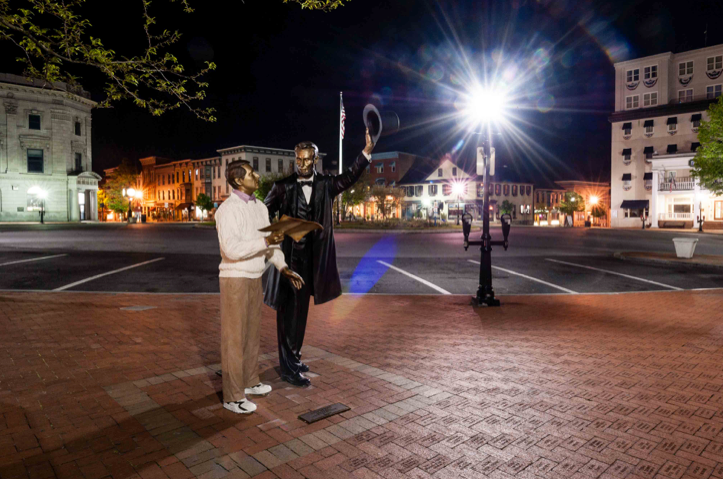 Please drop in for a visit; I’ll give you the “guided tour.” You can catch me at the studio, 23 Baltimore Street, Suite 100. I’m there most afternoons, but best to call ahead just in case (717) 321-5966.
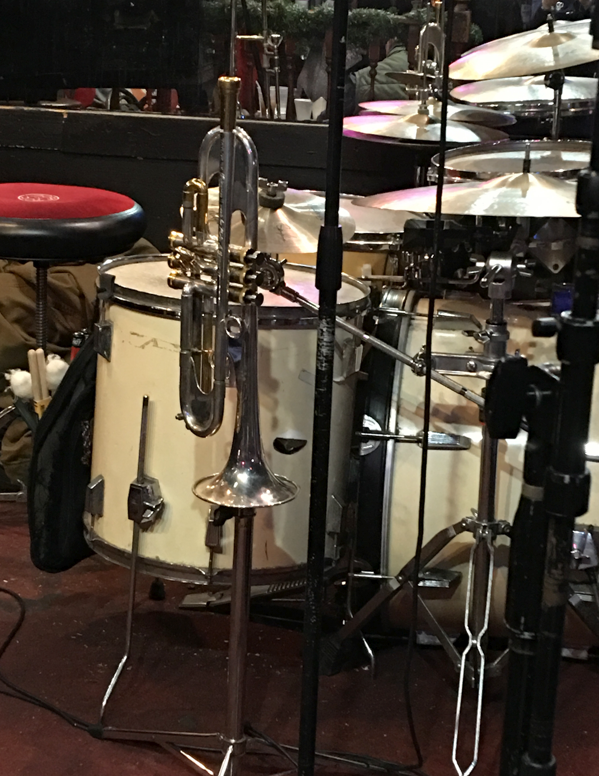
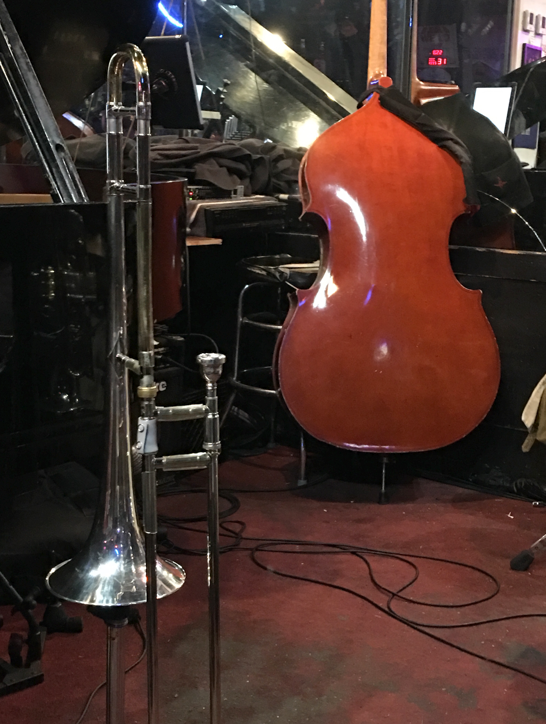
In June, I’ll be going out west again this year. My first stop is in Salina, KS, for the Little Big Horn Association annual get-together. Then I’ll head over to Hardin, MT, for the Battle of Little Big Horn Anniversary on June 25, and the Custer Battlefield Historical Museum Association annual symposium. I plan to sign books at the NPS Visitor Center over that weekend. In July, I’ll be attending the World Expo 2017 at the Chicago Hilton, on July 7, 8 and 9. I’ll be there with my good friend Keith Rocco. If you’re in the area, stop in say “hello.” OK folks, I think that’s all the news fit to print for right now. It has been a while since my last blog. Over Christmas and New Years I did a photojournalism project in New Orleans for a magazine article of places where traditional New Orleans jazz is still played. Since the increasing popularity of Zydeco and other music forms, finding the original New Orleans jazz (what some up north refer to as Dixieland jazz) was not as easy as you might think. I did find it, though… and, made many new friends among the musicians, took some interesting photographs, and listened to some of the best in the country play music I love.
Back in Gettysburg, I found that a local bistro featured a jazz trio, an event at the Arts Council highlighted a jazz quartet, and Gettysburg College has an internationally known jazz ensemble. I’ve heard all except the College musicians, and found that the love of jazz is the same regardless of location; I knew it would be so. You probably guessed it; I decided to do an article on jazz in Gettysburg, currently in the works. I am planning to be out west for most of June at the Little Big Horn Associates meeting in Salinas, KS. Then on to the Custer Battlefield Historical and Museum Association symposium in Hardin, MT, during the anniversary of the battle. I will also be attending the World Model Expo, at the Hilton Hotel, in Chicago on July 7-9, with my friend Keith Rocco. If you are in the area, please stop by and say “hello". Here’s the latest news! I am opening a photography studio in Gettysburg. It is Will Hutchison Photography, at 23 Baltimore Street, Suite 100 (717-321-5966), just off the Gettysburg Square. This is a dream I’ve had for over twenty years, since leaving military service. My studio is in a humongous space. I have plenty of room for the equipment I accumulated over decades. It is there I can make light dance to whatever tune I play. Right now, I’m working with a local interior designer entrepreneur to set up the space. I will open for business in April. My emphasis is on portraits, headshots, product photography, historical collections, photojournalism projects for magazines, various events, and to collaborate, as needed, with artists like Keith Rocco and Don Troiani, and finally, whatever else strikes my fancy.
“They won the battle, but lost the war” summarizes Mr. Hutchinson’s approach to the Battle of the Little Big Horn and the route of Custer’s troops. The U.S. persisted in a relentless military campaign to drive the natives into reservations under their control, while the remnant under Sitting Bull found that the Canadian “Mounties” who were both policemen and magistrates stressed cooperation, provided they observe Canadian law. Click the PLAY button below, to listen to the Podcast.
 Everyone needs to recharge now and then. Last week, we were lucky enough to combine a bit of recharging with a bit of book marketing. We needed the recharge because we lost our beloved Sheltie, Robbie, a short time ago. And as many of you know, a pet is a member of the family and the loss is tough to handle. So, we decided to go to one of our favorite spots, Santa Fe, New Mexico. We just wanted to hang out, visit some friends, and see if any of the museums might like to carry the new book. We learned once again that sometimes you get blindsided, as I did, but it was awesome! 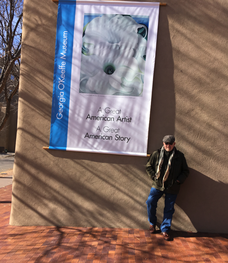 A very good friend texted me and told me to check out my book on Amazon. Wow! I saw that my latest book, Artifacts of the Battle of Little Big Horn, made the Number One Best Seller on Amazon in its category. Apparently, it was also in the top 40 books overall. I know Amazon updates their ratings frequently, but it is good to know it made it. Sort of makes all the work involved in photographing and writing worth it. I am really very humbled and privileged - Thank you readers and friends.
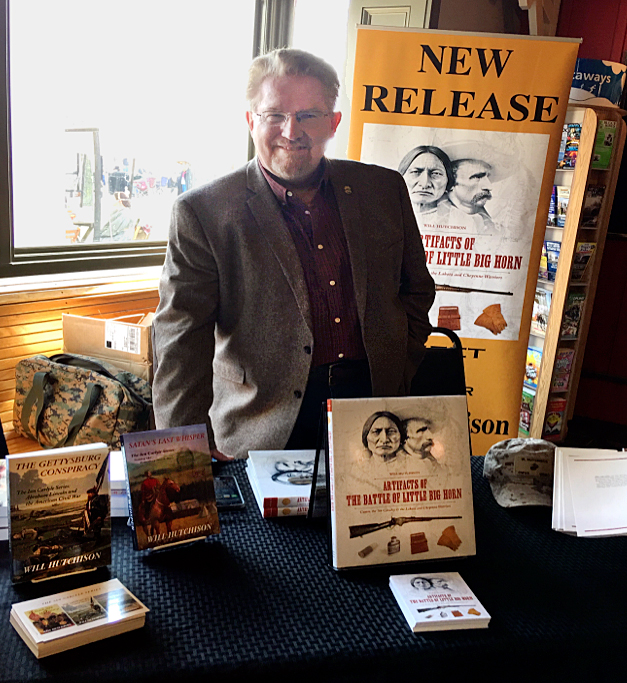 This last weekend was both great and melancholy for me. It was Remembrance Day in Gettysburg where a massive hour-long parade of Union and Confederate living history units marched to honor those who fought here so many years ago. I was a part of one unit for many years – the 2nd and 4th US Infantry, “Sykes Regulars” of the National Regiment. It was melancholy for me because the Gettysburg Heritage Center is located right on the parade route, near its end point. During the parade itself there were few folks inside the Center, so I had time to walk out and watch the National Regiment pass by. The 5th New York (Duryea’s) Zouaves were in the lead, in the position of honor as the left flank company, and Sykes’ US Regulars brought up the rear with the honor of being the right flank company. They were sharp as a tack, and, as always, I was proud, although a bit sad that I was not marching with my friends. You see I haven’t actually been in the field with the Regiment for the past few years. Nevertheless, many of my old pards managed to glance their eyes sideways and wink or smile when they saw me on the roadside. I saluted the National Regiment’s Color as it passed by my position, and gave them my biggest smile as the companies went by one by one. I remembered when each year Col. Terry Daley, the first commander of the National Regiment, and I, as the then Adjutant, would stand along the parade route in front of the Farnsworth House while the Regiment conducted a Pass in Review – band playing – eyes right – to salute their Colonel. It was my honor to serve, and I miss those days. I guess it’s just another small reason for calling it Remembrance Day. At least for me it is. As for me, I was very fortunate to be a featured author, on Saturday and Sunday, at the Gettysburg Heritage Center, formerly known as the wax museum. Although the Center featured all of my books, I especially liked to talk to folks about my newest book and the Battle of Little Big Horn and its famous participants George Custer and Sitting Bull. Thanks to Tammy Meyers and her staff for all their help in a successful couple of days. I think everyone would agree it was a great weekend. The weather was a fine autumn day, the parade was amazing, and there was a special appearance, of actor and education advocate, LeVar Burton at the National Cemetery where he commemorated Lincoln’s Address. 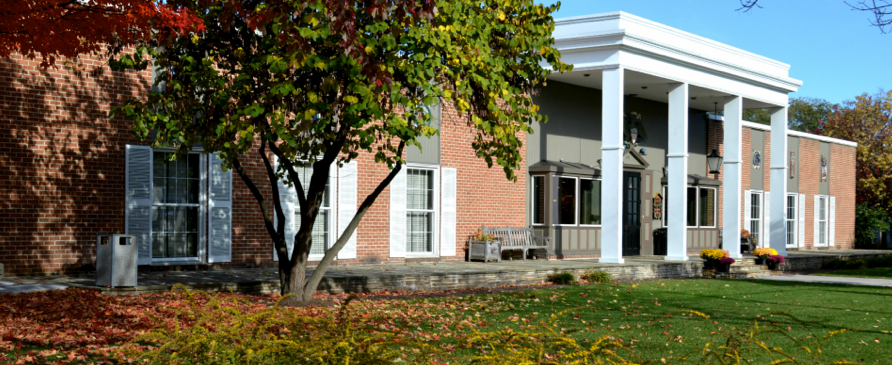 I am very pleased to share another event with you. It is the iconic commemorative event of Gettysburg Remembrance Day. 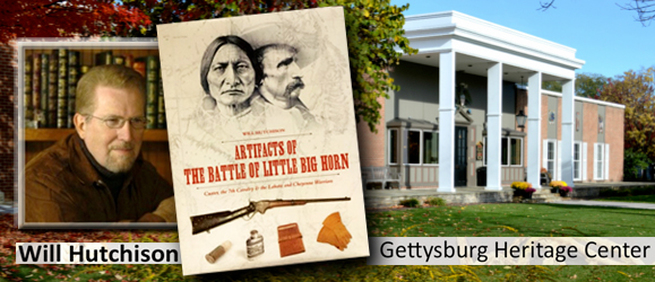 So many folks that study history and its lessons, who respect and revere all those that became a part of the Gettysburg history come together to pay tribute to that history. This year I will be at the Gettysburg Heritage Center where we can meet and say “hello.” And to discuss George Custer’s role in the Gettysburg Battle and his eventual fate in the Battle of Little Big Horn, a principal focus in my new book Artifacts of the Battle of the Little Big Horn: Custer, the 7th Cavalry & the Lakota and Cheyenne Warriors." The Heritage Center has a great museum, gift shop and educational tools. Stop in on Saturday, November 19th, 12pm to 2pm and Sunday, November 20th, 12pm to 2pm, Gettysburg Heritage Center, 297 Steinwehr Avenue, Gettysburg, PA.
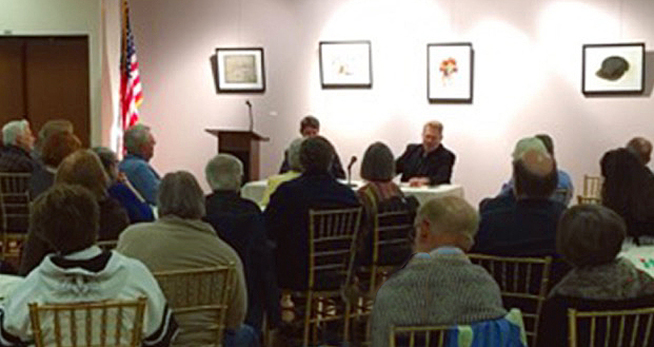 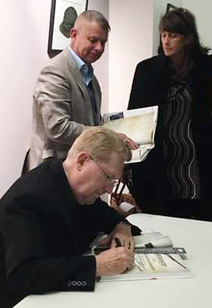 It’s been a week or so since our first book event to introduce my latest photographic endeavor, Artifacts of the Battle of the Little Big Horn: Custer, the 7th Cavalry & Lakota and Cheyenne Warriors. The response to our invitation was so overwhelming that I needed some time to reflect on the entire evening and how to tell you about it before I started this blog.
First, it was such a privilege to be hosted by the Adams County Arts Council Center. It’s a place where the arts inspire, engage and entertain people everyday. I thought it was the perfect setting to present a work of historical photography. Just as the program was set to begin, I looked out toward the Main Gallery entrance, and the line was literally out the door. I could feel the energy in the room….it seemed like magic was in the air. Chris Glatfelter, the Director of the Center, kicked-off the program by introducing our “MC” Stan McGee, from the National Park Service at Harpers Ferry. Stan outlined the program for the evening and introduced Chris Ziegler, National Park Service at Hardin, Montana. Chris described how the project to photograph and write about the artifacts of Little Big Horn started initially, and how I got permission to photograph the entire onsite National Park collection of those artifacts. I felt very honored that Ted Streeter, the Mayor of Gettysburg, came to participate in our event. The Mayor introduced Chris Gwinn, a Supervisor Park Ranger at the Gettysburg National Park, and me. Chris interviewed me “Charlie Rose” style, using his Masters Degree in Public History to help the audience explore lesser-known aspects of the Battle of the Little Big Horn. Through his questions we were able to shine a light on the tension between morals and duty; explore the varying points of view about Custer’s actions and the strategy of the 7th Cavalry; and describe the fate of the Indian Warriors at the battle. Our discussion highlighted how the history of a battle so well known to millions around the world is also filled with lots of mystery and lore. I want to thank the table of historians, including Bruce Liddic and Dave Harrington, who kept me on the right track. Thanks to all those who waited in line for me to sign their book, their awesome comments and to the fantastic team that put the event together. Just to wind up, I simply cannot adequately express my gratitude to all the people who shared the evening with me and made this unforgettable evening possible. Hi Folks, The October 14 Book Event has taken on a life of its own, but it looks like it's all coming together and promises to be a great program. I am so pleased that several Custer/Little Big Horn historians will be with us, like Bruce Liddic and Phil Gibbons. Although I must admit it is a bit intimidating. Our program will be a bit unorthodox for a book event. We are going to have a conversation with the author by conducting an interview on stage in the "Charlie Rose" tradition. Chris Gwinn, National Park Service-Gettysburg, has graciously agreed to do the interview. I understand he is going to ask some tough questions about the many controversies surrounding Custer and the Battle. Can we ever know the whole story? A question and answer period to follow. It should be great fun and informative. I have many books to be sent to folks who requested copies, and those who helped so much with the project. As soon as the Event is over, I will concentrate on shipping them out. Of course, everyone who attends the Book Event will receive a personalized, signed copy that is included in the ticket price. Looking forward to seeing everyone who can make it on October 14th. 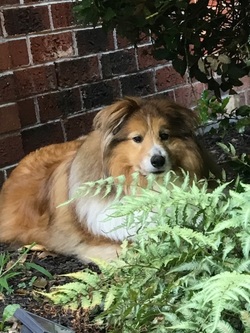 Say "Hello" to Robbie,
He told Ron Hankey he knows --- but isn't telling ---- just yet. |
NewsBookmark this page and check back often for updated news and events. Archives
June 2017
Categories
All
|



 RSS Feed